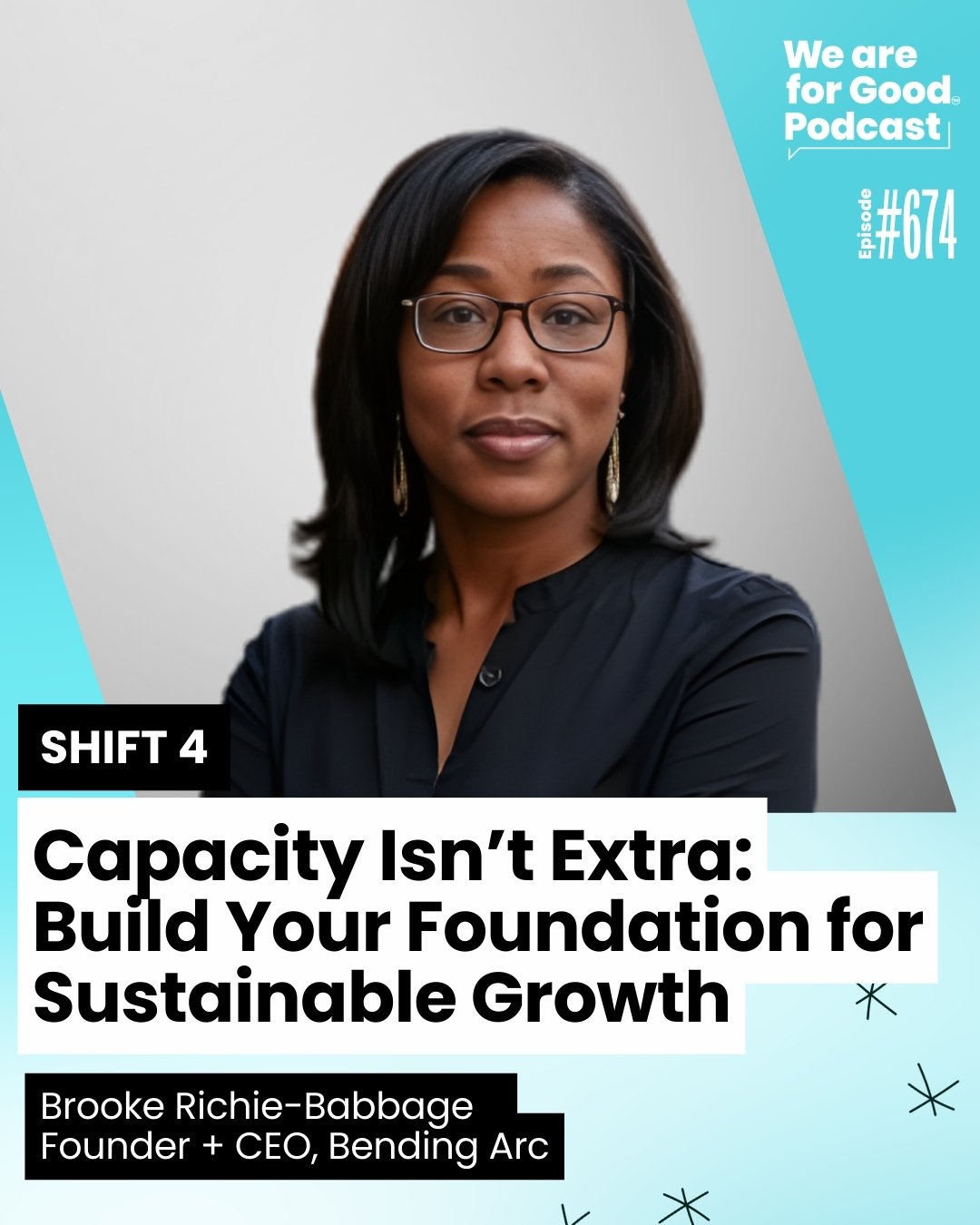
674. Shift 4 — Capacity Isn’t Extra: Build Your Foundation for Sustainable Growth - Brooke Richie-Babbage
Listen to this episode
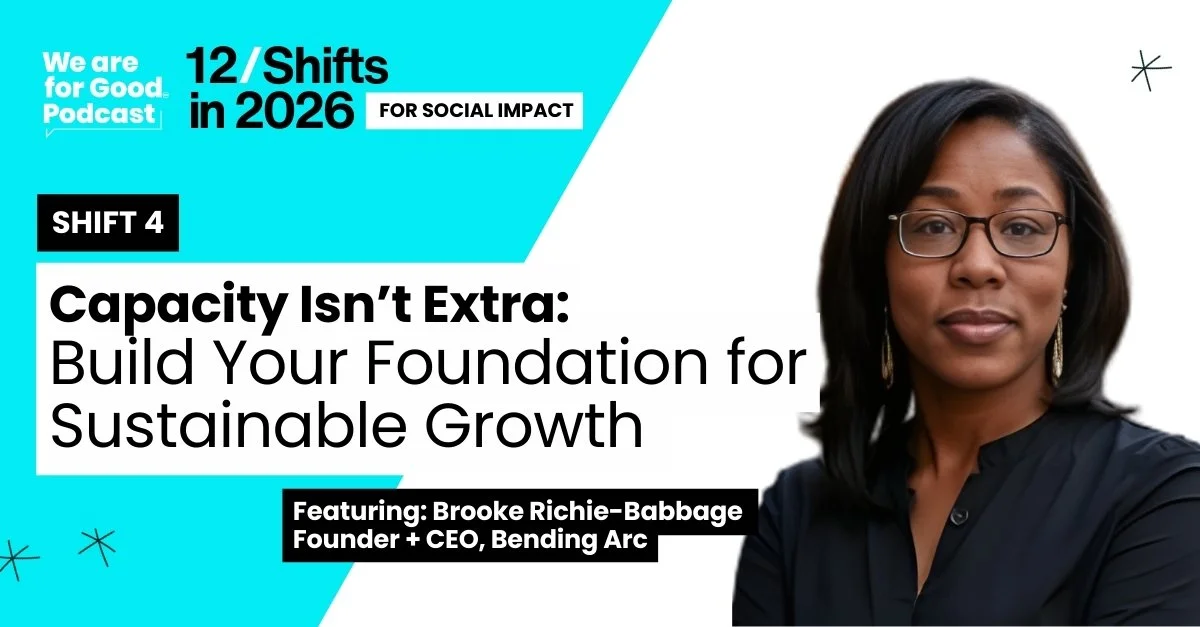
This episode is part of 12 Shifts in 2026 for Social Impact.
Overview
Stability isn’t something you earn once you’re “big enough” or “finally staffed up.” It’s something you design on purpose—or you pay for it later in burnout, panic fundraising, and house-of-cards vibes.
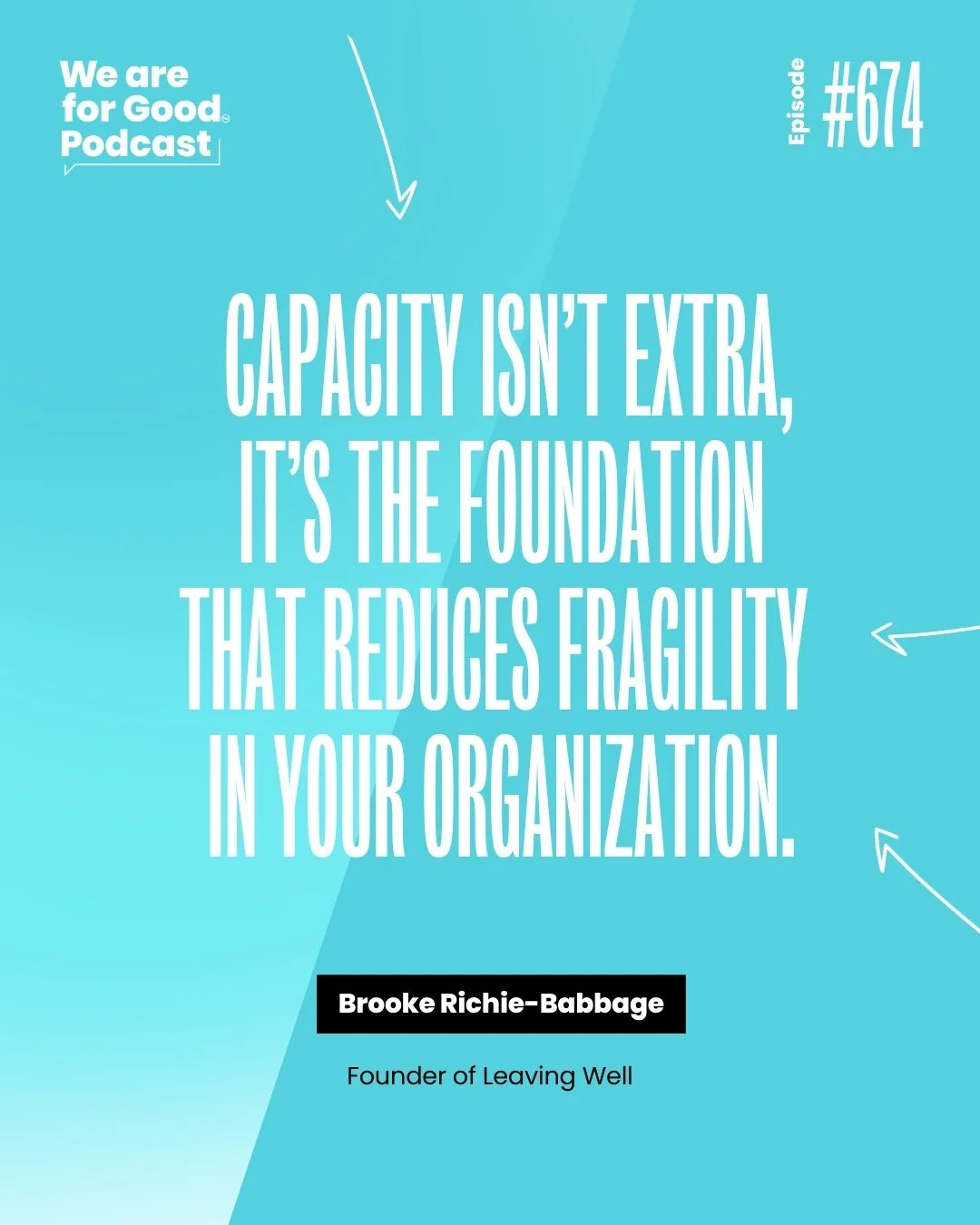
In this episode, Brooke Richie-Babbage is back to flip the script on what capacity really means. Capacity is about changing the conditions under which your work happens, so the how of the work gets easier, less fragile + way more sustainable.
We’re talking broken mugs, creaky floors, cash cliffs, “build years” vs. “growth years,” and why “stability is a leadership choice” might be the most freeing (and challenging) mindset shift you make in 2026. If you’ve ever thought, “We’ll feel stable when we finally _______,” this episode’s your loving interruption.
You’ll walk away with clarity + next steps to build real capacity, including how to:
Redefine capacity + stability as design problems, not personal failures
→ Shift from “I just need the right people / next grant / better tool” to “Where is our organization fragile, and how do we strengthen the container—systems, rhythms, decision-making—so the work doesn’t require heroics?”Narrow priorities + clean up decision-making so everything stops bottlenecking at the leader
→ Get practical about choosing fewer, deeper priorities; naming what you’re not doing this year; and mapping who actually owns which decisions—so your ED (or you) isn’t secretly holding six out of ten critical calls.Build stability through simple financial + operational rhythms (not just more hires)
→ Learn how to read your own “financial weather patterns,” plan for cash cliffs before they hit, decouple capacity from FTEs, and tap tools, fractional support, your board + community as legitimate capacity—not just “nice to haves.”
Take these three concrete steps this week to audit and strengthen your organization's capacity — no heroics required, just clarity that reduces fragility.
Map decision clarity: List your top 10 priorities or decisions for the next month. Assign clear ownership (who decides what) and spot bottlenecks — aim to redistribute so no one holds more than 3-4.
Assess leadership load: Review what only you (or your leadership team) are carrying. Flag items that could shift to systems, tools, automation, fractional support, or board — then delegate one this week.
Check cash flow rhythms: Pull your P&L, accounts receivable, and past quarter donor data. Predict your next "crunch" month (like April slumps) and schedule 2-3 proactive funder/donor conversations now.
Brooke’s Homework:
1) Name the Real Constraints
Here to help you: Name the real constraints in your organization — where are we feeling fragile? What’s causing this fragility?
Brooke urges mapping fragility sources like cash flow gaps, excessive meetings, or unclear ownership with your team — no blame, just honesty to uncover "design deficits." This step reveals what's truly draining capacity, like unpredictable revenue or overloaded leaders.
2) Design for Relief
Design for relief, not perfection — what is going to make you and your team feel like you are carrying less load?
Shift from ideal fixes to quick wins that lighten the load immediately, such as fractional support or streamlined info flows, freeing energy for mission work. It's about building a stronger container (house or cup metaphor) step by step.
3) Protect the System
Protect the system as you build it.
New processes may feel awkward or leak initially — resist reverting to old habits; give them time to solidify while iterating. This protects your redesigned infrastructure, ensuring long-term resilience over short-term comfort.
Dive Deeper:
614. Hold Fast: Your Blueprint for Building a Resilient Organization:
Episode 463: The Founder‘s Journey: Growing + Leading An Organization You Love
“The shift in capacity isn’t something where there is one KPI, it is felt.”
Episode Transcript
Download Full Episode Transcript Here
Episode Highlights
Understanding Capacity and Its Importance (02:59)
Defining Capacity: Reducing Fragility (05:43)
Designing for Stability in Organizations (08:24)
Shifting Mindsets: From Growth to Depth (11:28)
The Role of Community in Capacity Building (14:28)
Practical Steps to Build Capacity (17:02)
Real-Life Examples of Capacity Building (19:40)
Brooke’s One Good Thing + Homework (33:59)
Powerful Quotes
"Capacity building is about changing the conditions under which your work happens, making the how easier." — Brooke Richie-Babbage
"Stability is a leadership choice. Designing for stability is a decision we make as leaders to put the pieces in place, to make the house strong." — Brooke Richie-Babbage
"Capacity reduces fragility. It makes it more possible for you and your team to do the work without heroics, magic money, or running yourselves into the ground." — Brooke Richie-Babbage
"You build your own stability. It doesn’t happen because you’re a magical leader, all the pieces will never be in place." — Brooke Richie-Babbage
"Name the real constraints in your organization — where are we feeling fragile? What’s causing this fragility?" — Brooke Richie-Babbage
"Design for relief, not perfection, what is going to make you and your team feel like you’re carrying less load?" — Brooke Richie-Babbage
"Protect the system as you build it. It may feel uncomfortable at first, or even fail, don’t jump back to the old way." — Brooke Richie-Babbage
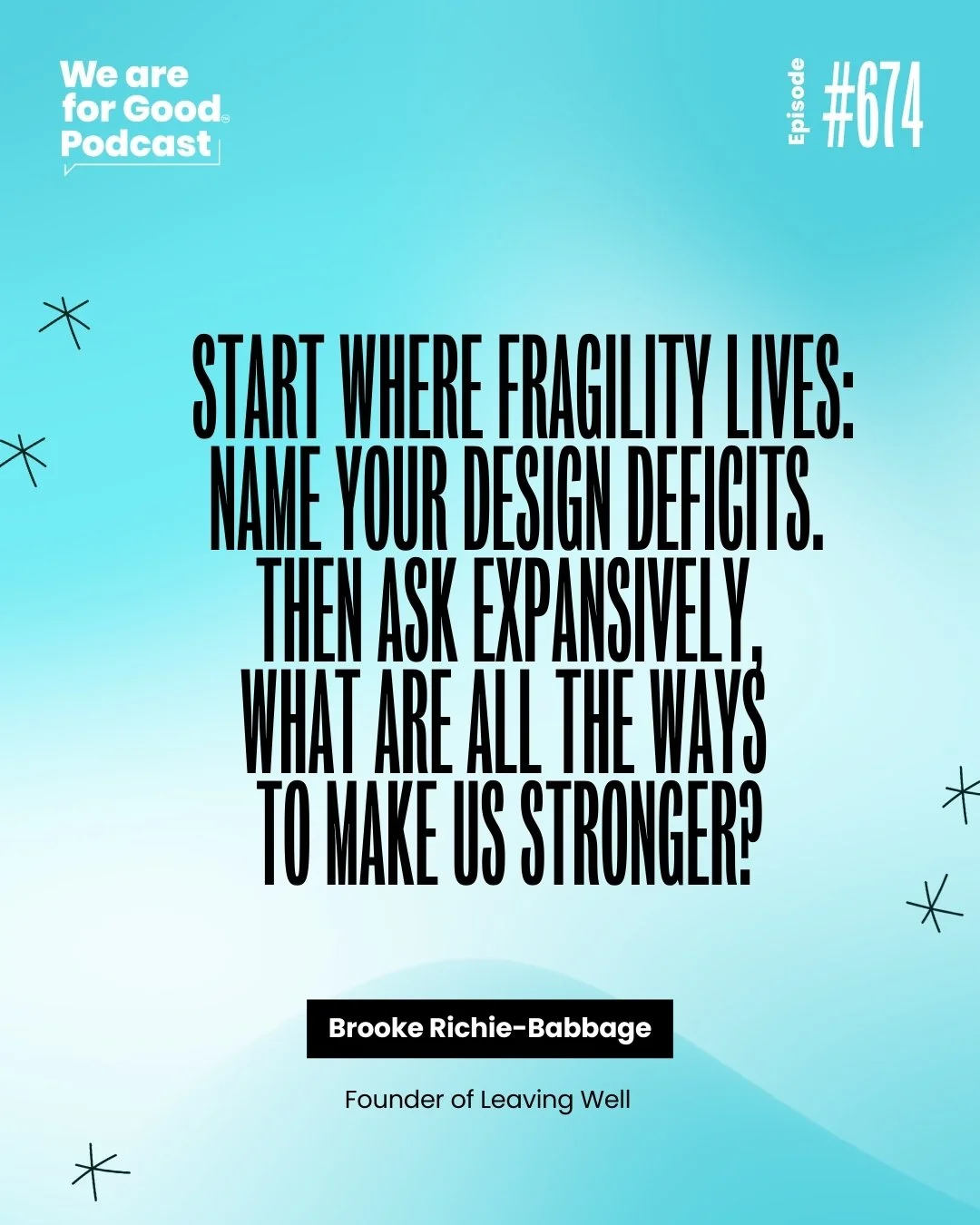
"Capacity building and hiring are not the same thing. Start with where we’re fragile, then ask: what are all the different ways to make us stronger?" — Brooke Richie-Babbage
"Have fewer priorities and clearer constraints. High-five every time you say no, it confirms what you’re saying yes to." — Brooke Richie-Babbage
"If your cup is cracked, it’s gonna leak out. That’s the fragility most leaders are sitting with, a house of cards." — Brooke Richie-Babbage
"Stability isn’t something you earn later. It’s something you design early, or you pay for it." — Brooke Richie-Babbage
Brooke’s One Good Thing (Homework Trio): "Be honest about the causes of fragility, design for relief, and protect what you build. There is hope." — Brooke Richie-Babbage
Connect with Brooke
LinkedIn / Website / Nonprofit Mastermind Podcast / Elevate Program
Connect with Jon
Connect with Becky
Come be part of the We Are For Good Community—totally free.
Join fellow changemakers, share takeaways from this working session, and keep collaborating in a space built for connection, inspiration, and real impact: www.weareforgoodcommunity.com
Say hi👇
LinkedIn / Instagram / Facebook / YouTube
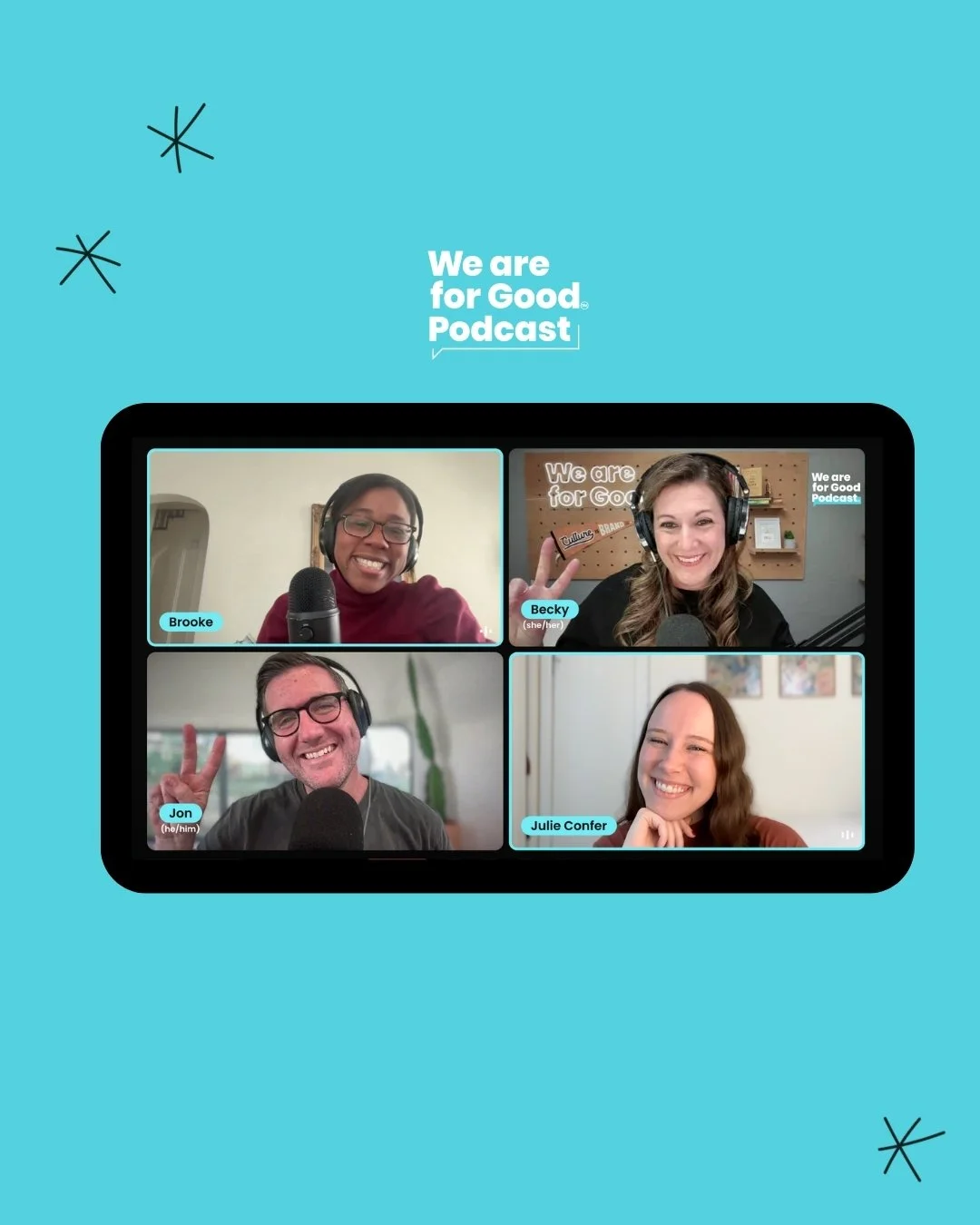
Studio Selfie